
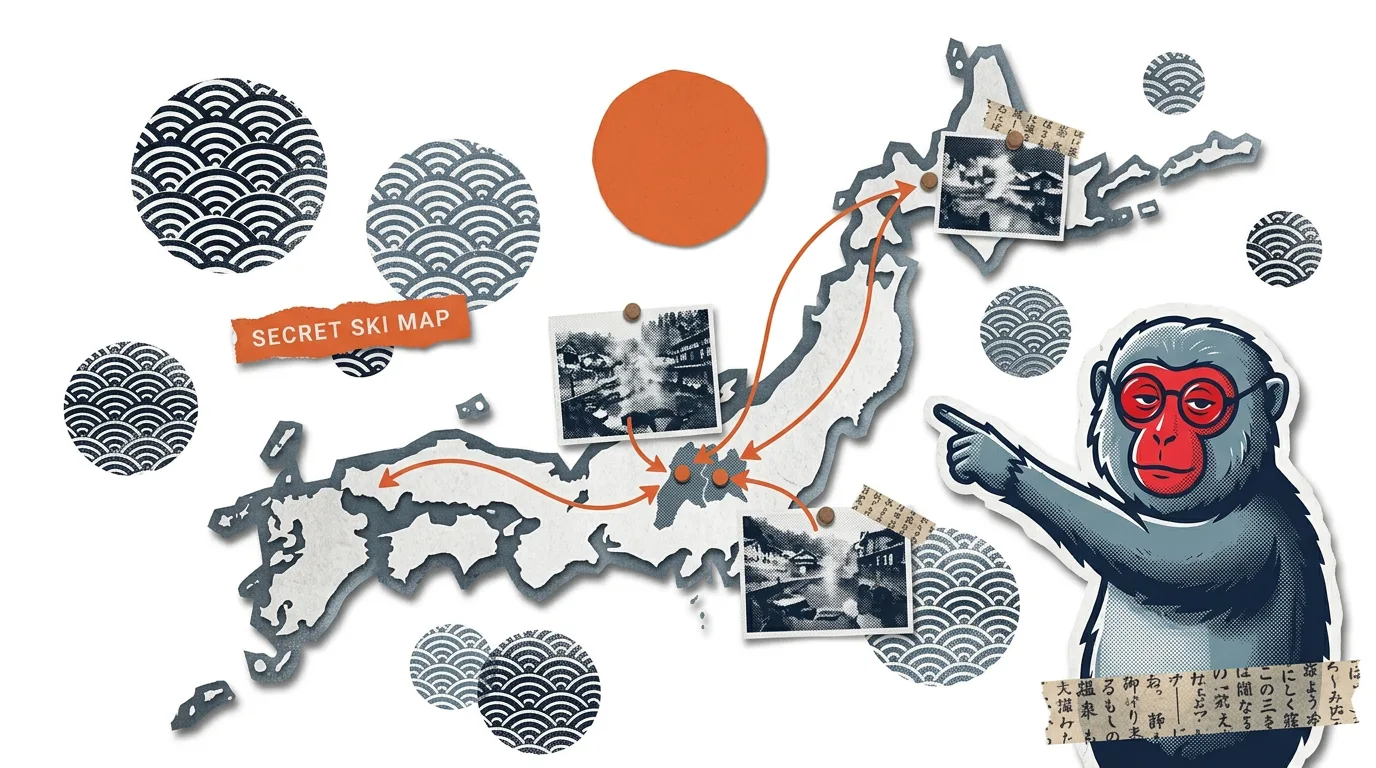
By Yudai — snow monkey, Nagano. Red sunglasses. Still not skiing. Part 2 of 3.
Welcome back. In Part 1 I explained who I am and why my species sits in hot water while yours straps planks to its feet and falls down mountains. Today I am useful. These are my picks: the individual onsen worth planning a day around, grouped by the regions you are most likely to ski.
I have soaked in a great many of these. The ones I have only heard about, I will tell you I have only heard about, because unlike a travel blogger I have nothing to sell you and no shame to protect.
Nagano — my home, and the best of the lot
I am biased. I am also correct.
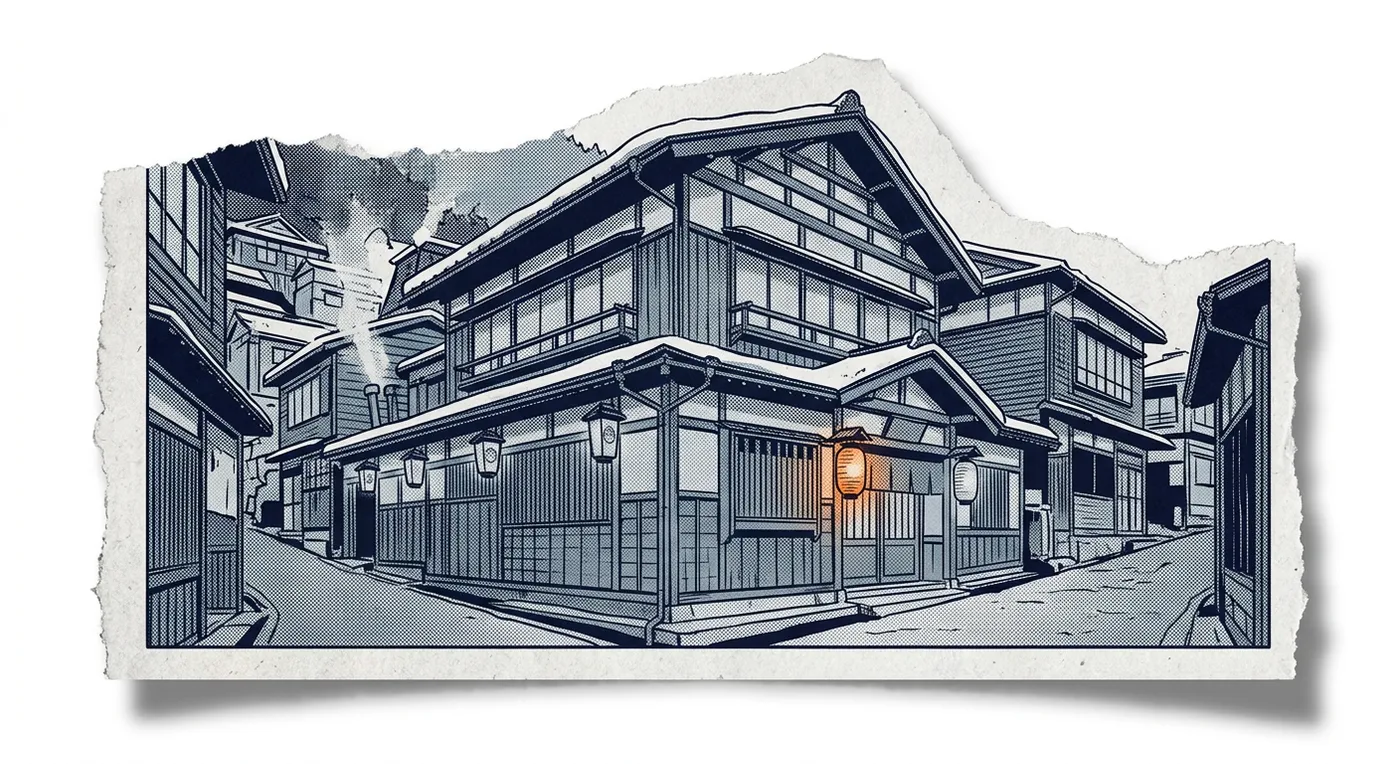
Nozawa Onsen is the one. A steep old village threaded with steam, and at the centre of it, thirteen free public bathhouses — the soto-yu — kept up by the townspeople themselves and open to anyone with the decency to wash first and drop a coin in the honesty box.
The grandest is Ō-yu, a two-storey wooden bathhouse over the main street that looks exactly like the postcard, because it is the postcard. The water in some of them is genuinely fierce — this is a recurring theme in my life and we will discuss temperature at length in Part 3 — so ease in and do not be a hero. Thirteen baths, one village, one afternoon. It is the closest a human gets to living like me.
My three for Nagano:
- Nozawa Onsen's Ō-yu — the flagship of the thirteen. Start here, then bath-hop the rest.
- Shibu Onsen, Yudanaka — nine public baths in a lantern-lit lane, and the town beneath the monkey park where my relatives bathe. Come see my family, stay for the water.
- Kōrakukan at Shiga Kōgen — a rustic mountain inn with an outdoor bath you can reach on skis, if you insist on skiing. Snow falling on your head, water to your chin. Even I approve.
Browse the lot: onsen and ski resorts in Nagano, or open Nozawa Onsen on the map.
Niigata — deep snow, quiet water
Cross the mountains north and the snow gets absurd. Niigata catches the full force of the wind off the Sea of Japan, dumps it as the lightest powder on earth, and keeps the onsen refreshingly free of tour buses.
- Echigo-Yuzawa — the onsen town the bullet train stops inside. You can be soaking within minutes of stepping off a train from Tokyo, which even I admit is impressive planning by your species.
- Akakura Onsen, Myōkō — old sulphur water at the foot of a volcano, milky and mineral and exactly the smell you want an onsen to have.
- Matsunoyama — one of Japan's "three great medicinal springs," salty and hot and gloriously far from anywhere.
See the region: ski resorts and onsen in Niigata, or the powder machine that is Kagura.
Gunma — the loud, hot, famous ones
Gunma is where Japan keeps its most theatrical hot springs. Be warned: this region does not do lukewarm, and I have strong feelings about that.
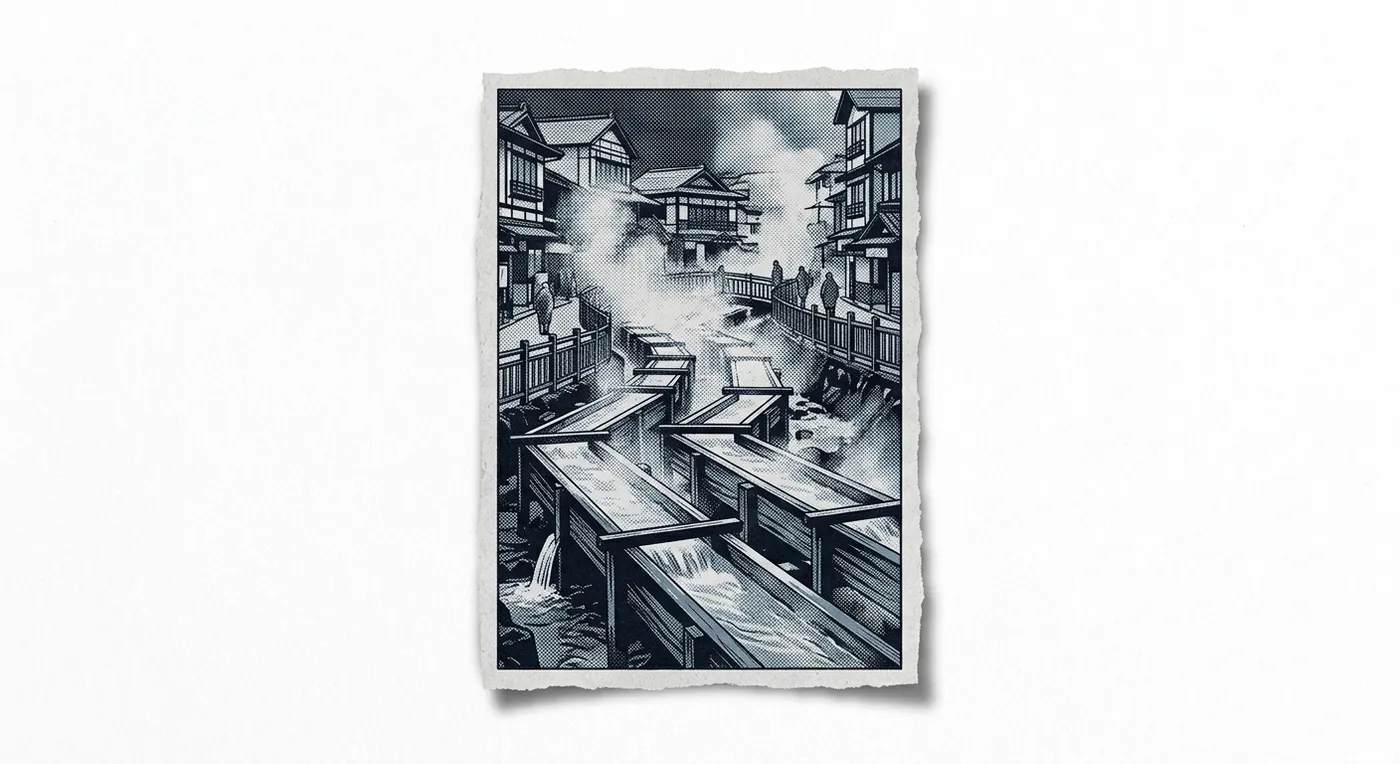
- Kusatsu — the most famous onsen in the country, built around the yubatake, a "hot water field" where scalding spring water is cooled in long wooden channels in the middle of town. The water here is proudly, aggressively hot. I have opinions. See Part 3.
- Manza — high in the mountains at over 1,800 metres, thick white sulphur water, snow all around, and a ski lift nearby. One of the finest cold-air, hot-water combinations in Japan.
- Minakami — a whole valley of springs above the Tanigawa gorge, handy for the Gunma ski areas and far calmer than Kusatsu.
Explore: ski resorts and onsen in Gunma.
Hokkaido — volcanoes and the other Hell Valley
The far north. More snow than seems reasonable, and volcanic water to match.
- Noboribetsu — Hokkaido's onsen capital, sitting below its own steaming Jigokudani, "Hell Valley," just like mine. Nine different kinds of mineral water in one town. Suspiciously good.
- Niseko — yes, the powder is real, and underneath all the international noise there is proper onsen water. Look for the older baths like Yukoro and the milky Goshiki spring up the mountain road.
- Asahidake — a lonely bath at the foot of Hokkaido's tallest volcano, backcountry snow above it, almost nobody around. My kind of place.
See it all: ski resorts and onsen in Hokkaido, or the big one, Niseko United.
Tohoku — the wild, rustic north of Honshu
If you want onsen that feel like they were built by people who had never heard of a tourist, come to Tohoku.
- Zaō Onsen, Yamagata — highly acidic sulphur water said to be good for the skin, a bathhouse village you can ski straight into, and the famous frost-covered "snow monsters" on the peak above.
- Nyūtō Onsen, Akita — a cluster of ancient thatched-roof inns deep in the beech forest, milky water, wooden tubs, and the strong sense you have travelled back three hundred years.
- Sukayu, Aomori — home of the Hiba Sennin Buro, an enormous thousand-person cypress hall. Mixed bathing, tremendous atmosphere, and water that does not mess about.
One honest admission
I have not personally sat in every bath on this list. A monkey has range but not a rail pass. Nyūtō and Sukayu I know by reputation, from macaques and humans I trust. Everything in Nagano I know with my whole body.
If you only do one thing with this guide, make it Nozawa's thirteen baths. Wash first, tip the box, take it slowly, and by the fourth or fifth bath you will understand why my species came down off the cliffs and never went back up.
In Part 3, the serious business: how to behave so the locals smile instead of sigh, exactly how hot is too hot — I have a number — and the small, silly game the bear built for your rest days.
Plan your soak
- Every resort with a hot spring near the slopes.
- Compare two towns head to head on Secret Ski Map's compare tool.
- The cutest, quietest little ski hills, for a gentle onsen-first trip: our "cute" picks.
- The whole country, one map: Secret Ski Map.